
How Inadequate Reel Storage Undermines Your Entire Static Control Program
Introduction
Walk into any well-run SMT assembly floor and you will see a comprehensive static control program in action: operators wearing wrist straps, ionizers positioned at every workstation, ESD flooring throughout the EPA, and access gates controlling entry. The investment is significant, and the intent is clear—protect sensitive components from electrostatic discharge at every step.
Now walk into the warehouse. You may find a very different picture: carrier tape reels stacked loose inside ordinary cardboard boxes, different reel sizes mixed together in generic plastic totes, with no separation and no ESD protection whatsoever. These seemingly minor details could be silently damaging your product quality.
Industry data suggests that approximately 25–30% of ESD damage occurs during component storage and handling, not during the pick-and-place process itself. This means that even a world-class SMT line cannot compensate for an unprotected warehouse. If the storage link is broken, the entire ESD protection chain is compromised.
1. Why Reel Storage Is the Weakest Link in ESD Protection
To understand the risk, consider the static generation mechanisms at work in a typical storage environment:
• Triboelectric charging: When reels are placed into and removed from ordinary boxes, friction between reel surfaces, packaging materials, and adjacent reels generates static charge. Without individual separation, every retrieval causes multi-reel contact and friction
• Insulative packaging materials: Standard cardboard and generic plastic containers are insulators with surface resistance typically exceeding 10¹²Ω. They cannot dissipate accumulated charge. Static builds up on reel surfaces and remains there until a sudden discharge event occurs upon contact with a grounded conductor
• Environmental factors: Dry seasons or low-humidity environments (relative humidity below 30%) dramatically amplify static issues. Many factories control humidity on the production floor EPA but neglect the warehouse
• Extended exposure time: Reels may sit in storage for weeks or even months—far longer than the brief handling time on the production line. This extended window multiplies the cumulative ESD risk
It is important to understand the two types of ESD damage:
• Catastrophic failure: The device loses function immediately and can be caught during testing
• Latent defect: The device is weakened but still passes outgoing inspection, only to fail weeks or months later in the field. Latent defects are far more dangerous because they escape quality gates, reach end customers, and result in warranty claims and loss of trust
2. What Industry Standards Require for Storage
ESD protection during storage is not optional—it is explicitly mandated by multiple international standards:
• ANSI/ESD S20.20-2021: The cornerstone ESD standard requires that all packaging materials within the EPA that contact ESDS (ESD-sensitive) items must be either static dissipative or conductive. This includes storage containers, totes, bins, and trays—not just bags and tubes
• IEC 61340-5-1: The international standard specifies that packaging materials used for storage and transport must have surface resistance in the 10⁶–10⁹Ω range (static dissipative classification)
• JEDEC standards: For moisture-sensitive devices (MSD), JEDEC imposes additional storage requirements including dry packaging and shelf-life management, with ESD-safe containers as a baseline requirement
The audit reality: Many factories pass production floor ESD audits with ease but lose points in the warehouse. The reason is straightforward: production line ESD equipment is visible and well-maintained, while storage packaging is often an afterthought. When the auditor pulls out a surface resistance meter and tests your storage boxes, ordinary cardboard and plastic containers will read well above the 10⁹Ω upper limit.
3. Technical Requirements for Professional Reel Storage
A compliant ESD reel storage solution must meet requirements across three dimensions: material, electrical performance, and structural design.
3.1 Surface Resistance: Lower Is Not Always Better
The ideal surface resistance range is 10⁶–10⁹Ω (static dissipative). This range exists for sound technical reasons. Too high (>10⁹Ω) and the material cannot effectively drain charge. Too low (<10⁶Ω, i.e., conductive) and the material may create unintended conductive paths between device pins, posing a short-circuit risk. Static dissipative materials safely bleed charge to ground at a controlled rate.
3.2 Material Selection
The industry standard for ESD storage containers is carbon-black filled polypropylene (PP) or polystyrene (PS). Carbon black particles dispersed uniformly throughout the polymer matrix provide stable static dissipative properties. Unlike surface coatings or sprays, this volume-conductive approach does not degrade with wear—the ESD performance remains consistent throughout the product’s service life. The characteristic black color also serves as a visual management cue within the EPA.
3.3 Structural Design Considerations
Purpose-built reel storage solutions typically employ two core design approaches:
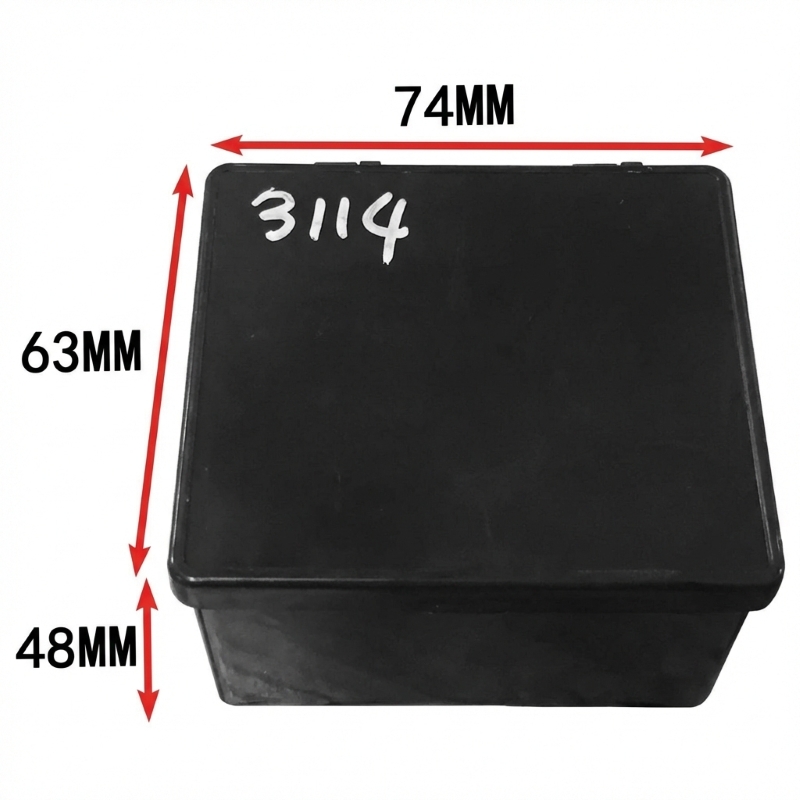
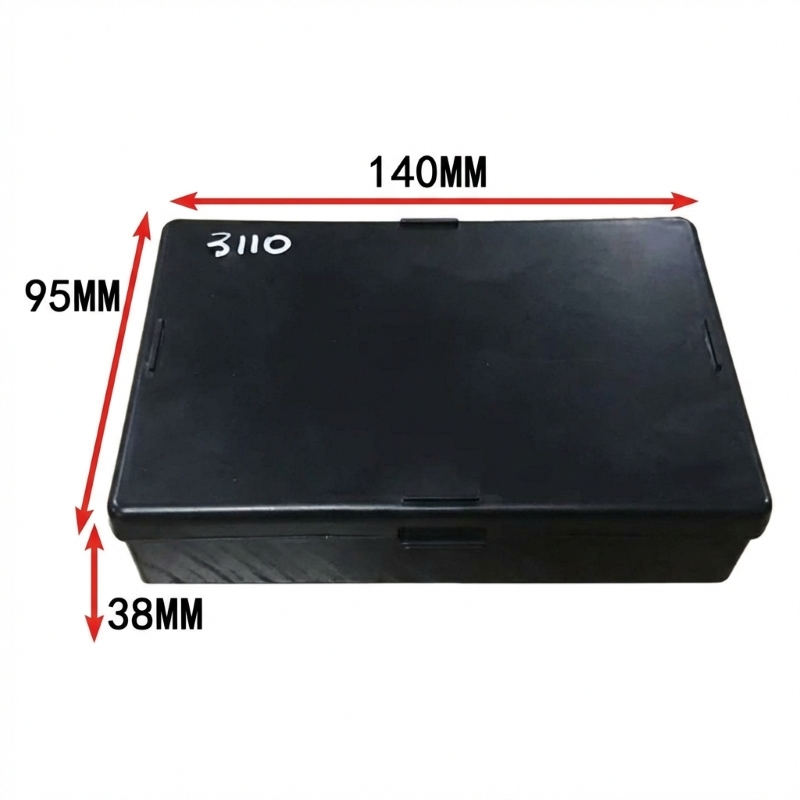
• Slotted divider design (Storage Box type): Internal wave-pattern slots hold each reel in an individual upright position, completely eliminating inter-reel friction while enabling rapid identification and retrieval of individual reels. [Internal link: Product page – ESD SMT Reel Storage Box]
• Stackable bin design (Bin type): Reels are laid flat and stacked inside the bin. Once full, a lid seals the container, and multiple bins stack vertically. Ideal for bulk long-term storage, maximizing warehouse space utilization. [Internal link: Product page – ESD SMT Reels Bin]
• Standard size compatibility: The two most common reel specifications in the industry are 7” (180mm) and 13” (330mm). Professional storage solutions should precisely accommodate both formats
4. How to Evaluate and Select the Right ESD Reel Storage Solution
4.1 Selection by Usage Scenario
|
Scenario |
Recommended Solution |
Rationale |
|
Line-side buffer / frequent access |
Storage Box M (30 reels) or S (26 reels) |
Slotted dividers for quick single-reel retrieval |
|
Warehouse bulk storage |
Bin L or Bin S |
Stackable, sealed, maximizes vertical space |
|
Incoming inspection / kitting area |
Storage Box S (sorting) + L (13” reels) |
Flexible sorting, accommodates both sizes |
|
WIP material transfer |
Combination based on turnover rate |
High-frequency: Storage Box; low-frequency: Bin |
4.2 Selection by Reel Size
|
Reel Size |
Storage Box Model |
Capacity |
Dimensions (mm) |
|
13” (330mm) |
L |
33 reels |
560×357×177 |
|
7” (180mm) |
M |
30 reels |
460×190×110 |
|
7” (180mm) |
S |
26 reels |
410×190×110 |
4.3 Acceptance Testing Recommendations
Regardless of which solution you adopt, we recommend using a surface resistance meter (such as DESCO or SIMCO instruments) to spot-check incoming containers and confirm readings fall within the specified 10⁶–10⁹Ω range. Establish a periodic testing schedule (e.g., quarterly) to monitor long-term ESD performance stability.
5. Common Misconceptions About Reel Storage ESD Protection
1. "Antistatic bags are sufficient"
Antistatic bags are designed for individual devices or small-quantity packaging. For bulk reel management, they are impractical—every retrieval requires opening a sealed bag, reducing efficiency, and repeated opening degrades the bag’s ESD performance.
2. "Just spray an antistatic coating on regular bins"
Surface coatings degrade with use. Testing shows that typical antistatic coatings can exceed the specified resistance range after 200–300 use cycles. Carbon-black filled volume-conductive materials maintain ESD performance throughout the entire material cross-section, unaffected by surface wear.
3. "Metal containers offer the best static protection"
Metal is a conductor (surface resistance <10⁴Ω), not a static dissipative material. Storing components in metal containers can create low-impedance paths between device pins, posing a short-circuit risk. Industry standards explicitly require that packaging in direct contact with devices should be static dissipative, not conductive.
4. "ESD flooring in the warehouse is enough"
ESD flooring addresses static accumulation from personnel walking. It does nothing to resolve triboelectric charging occurring inside insulative packaging. When reels rub against each other inside a non-conductive box, the generated charge cannot conduct through the insulative packaging to reach the floor.
Conclusion
ESD protection is a systems-level discipline—its effectiveness is determined by the weakest link. When production floor ESD controls are already comprehensive, reel storage and handling often become the proverbial short stave of the barrel. Adopting professionally engineered ESD storage solutions that comply with industry standards is not merely an audit checkbox—it is a critical measure to reduce ESD-related defect rates at the source and safeguard product quality through to the end customer.
|
Further Reading ☛ See how one EMS factory reduced ESD-related defect rates by 42% by upgrading their reel storage: [Internal link: Case Study] ☛ Browse our complete ESD reel storage product line |