
A practical look at contact pressure, cushioning space, packaging weight and total system cost in large electronic-module packaging.
If EVA and IXPE Offer More Stable Resistance, Why Is 28 kg/m³ Anti-Static EPE Still Used for PCBA Trays?
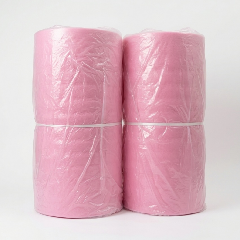
Pink anti-static EPE is not the foam with the most stable electrical performance. For a 28 kg/m³ grade, the target surface-resistance range is commonly 10⁹–10¹¹ Ω, but the measured value can change with storage time, temperature and relative humidity. Permanent anti-static EVA or IXPE generally provides more stable resistance over time.
Why, then, is low-density anti-static EPE still used for many PCBA, LED module, communication-board and electronic-assembly trays?
|
In many short-cycle electronics-shipping projects, anti-static performance is an entry requirement. Contact stress, cushioning distance, packaging weight and total system cost are often what determine the final material choice. |
1. What Actually Damages a Large Electronic Board?
A large PCBA or LED module may be relatively light while still being mechanically vulnerable. Typical risks include a thin PCB, a large unsupported area, components on both sides, exposed connectors and the possibility of stack loads being transferred through sensitive parts.
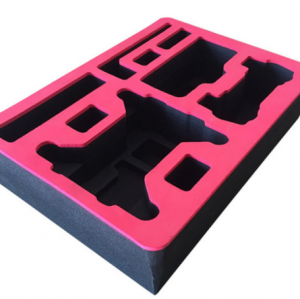
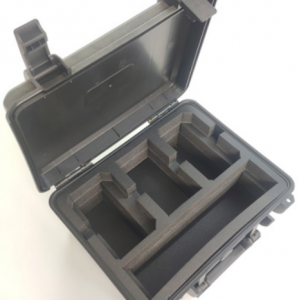
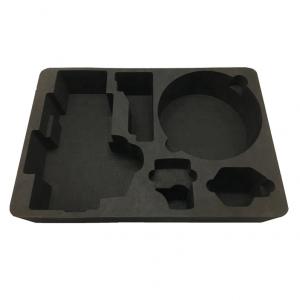
A suitable tray must do more than provide a rectangular pocket. It should:
• Support the PCB edge or other approved component-free areas;
• Provide clearance for components on the underside;
• Restrict lateral movement and prevent module-to-module contact;
• Route stacking loads through the perimeter frame and dividers;
• Provide controlled compression travel during shock and vibration.
A high-hardness foam used with an interference fit can place unnecessary force on a thin PCB edge. The correct objective is not maximum hardness. It is secure location without excessive clamping.
2. Low-Contact-Stress Support
Locate the product without over-clamping it
Low-density EPE can deform slightly to accommodate product and converting tolerances. It can hold a board in position while reducing hard contact, PCB bowing, edge stress and excessive removal force.
Provide usable compression travel
Cushioning performance depends not only on foam hardness but also on available deformation distance. A 30 mm EPE structure can combine locating height, component clearance, a bottom cushion and interlayer separation. Under impact, progressive compression increases the deceleration distance and can reduce peak force.
Bypass the electronic assembly when trays are stacked
In a properly designed tray, the load from the tray above travels through the perimeter, dividers and support lands—not through LEDs, connectors, solder joints or other components. EPE therefore acts as both a locator and a compliant load path.
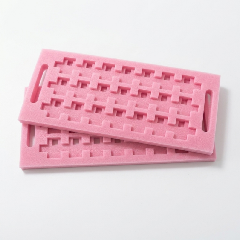
3. A Large Protective Volume with Very Little Material
Consider an uncut EPE blank measuring 565 × 430 × 30 mm. Its volume is approximately 0.00729 m³. At 28 kg/m³, the theoretical blank weight is about 204 g. The finished tray is normally lighter because product cavities are removed.
|
Foam density |
Theoretical weight at the same volume |
Change vs. 28 kg/m³ |
|
28 kg/m³ |
Approx. 204 g |
Baseline |
|
45 kg/m³ |
Approx. 328 g |
Approx. +61% |
|
65 kg/m³ |
Approx. 474 g |
Approx. +132% |
|
85 kg/m³ |
Approx. 620 g |
Approx. +204% |
This is a density calculation, not a claim that all EVA or IXPE grades use these densities. It illustrates a broader design point: when the tray mainly creates safe separation rather than carrying a heavy static load, low-density EPE can provide substantial protective volume with relatively little polymer mass.
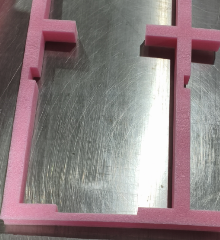
4. Well Suited to Product Families and Frequent Design Changes
Electronic-module programs often include several length and width variants with similar overall heights. The foam density, tray thickness, carton platform and inspection method can be standardized while only the cavity profile and layout are changed.
EPE can be die-cut, oscillating-knife cut and heat-laminated without an expensive rigid-plastic mold. For multiple SKUs, frequent revisions or uncertain initial demand, converting flexibility can be more valuable than maximum material durability.
5. Why Not Use ESD EVA or ESD IXPE Instead?
EVA and IXPE are not inferior materials. They are often the better choice under different operating conditions.
|
Application requirement |
Material normally worth evaluating first |
|
One-way export shipment or limited reuse |
EPE |
|
Low packaging weight and substantial cushioning space |
EPE |
|
Multiple SKUs and frequent revisions |
EPE |
|
High-frequency returnable use |
EVA or IXPE |
|
Tight dimensional control or automated handling |
IXPE or a precision-formed material |
|
Long-term permanent ESD performance |
Permanent anti-static EVA or IXPE |
|
Strict cleanliness and particle control |
IXPE or a validated clean-packaging grade |
For one-way or limited-cycle packaging, the additional tear strength, dimensional accuracy and service life of EVA or IXPE may not be fully used. In that case, the added cost and mass may not create equivalent customer value.
6. Be Transparent About the Electrical Limitations
The target surface-resistance range of this 28 kg/m³ pink anti-static EPE is 10⁹–10¹¹ Ω, but its anti-static performance is not permanent. Temperature, relative humidity, aging, package sealing and surface wear can affect the measured value.
Under suitable conditions, practical performance may remain acceptable for three to six months. Because export transit and storage conditions cannot be fully controlled, a more conservative commercial warranty of one month is normally used. The agreement should also define the starting date, sealing requirement, storage conditions, test method and pre-test conditioning.
Pink anti-static EPE should not be presented as electrostatic shielding. For sensitive electronics, a more robust system is to use EPE for location, cushioning and low-charging contact; a metallized shielding bag for discharge and field shielding; and an outer carton for stacking and puncture protection.
7. Information Needed to Design a PCBA Tray
• Product length, width, total height and a 3D STEP model;
• Top- and bottom-side component heights and approved contact zones;
• Required quantity per tray and carton inside dimensions;
• Maximum stack height, carton gross weight and distribution method;
• Expected number of handling cycles, transit time and shielding-bag requirements.
Conclusion
The advantage of 28 kg/m³ anti-static EPE is not that it outperforms every other material electrically. Its value is the ability to meet a short-cycle anti-static packaging requirement while providing low-contact-stress support, useful cushioning distance and product separation at low packaging weight.
|
For a one-way or limited-cycle PCBA tray, the best material is often not the material with the highest individual specification. It is the material that completes the protection task at the lowest total system cost. |