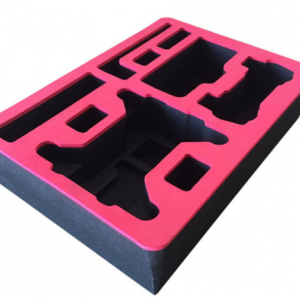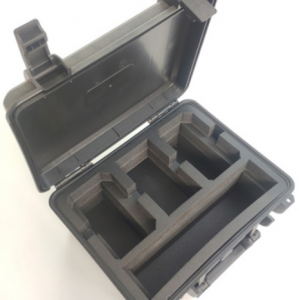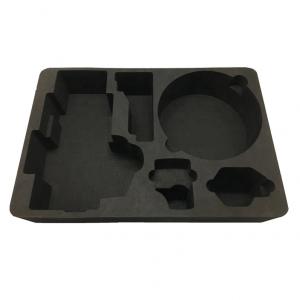

Designing a Complete ESD Packaging System Around Customer Handling Practices
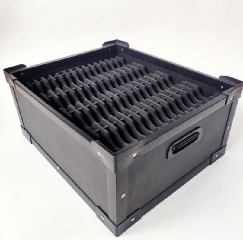
ESD PP Corrugated Box with ESD EVA Dividers
Effective ESD packaging is not created by selecting foam and a container separately. The container, foam, and dividers should be designed as one system based on the product, customer handling practices, protection requirements, order volume, and budget. Only when all three work together can the solution balance safety, operating efficiency, and total cost-effectiveness.
|
Quick Takeaway Yufa can integrate EVA, IXPE, or EPE foam with ESD injection-molded trays, ESD PP corrugated boxes, and ESD PP honeycomb structures to suit each project. The solution respects the customer’s established handling practices, while dimensions, structure, and material combinations are confirmed during project development. |
1. Start by Understanding How the Customer Uses the Packaging
Packaging design should not pursue theoretical optimization alone, nor should it force customers to change established workflows for the sake of the packaging. How products are loaded and removed, whether the packaging is used for shipping or repeated circulation, and whether the existing outer container will remain in use all affect the final solution.
Customers do not need to define every technical detail in advance. Provide a product drawing and the materials normally used, or simply describe the application and approximate dimensions; Yufa’s team can then develop an initial design.
2. Treat the Container, Foam, and Dividers as One System
|
Component |
Primary Function |
Key Design Considerations |
|
Container |
Handling, stacking, and external-impact protection |
Usable internal dimensions, circulation method, and transport environment |
|
Foam |
Position products, cushion impacts, and protect surfaces |
Product weight, vulnerable areas, and handling method |
|
Dividers |
Separate products and improve loading and organization |
Cell size, quantity, and ease of handling |
These three elements should not be purchased independently. Foam that is too thick may reduce usable packing capacity; overly dense dividers may hinder loading and removal; and a mismatch between the container and insert dimensions may allow product movement or waste material.
3. Three Common Integrated Configurations
1. ESD Injection-Molded Tray + Foam
Standard-size ESD injection-molded trays support standardized management and repeated loading and unloading. An ESD EVA foam pad can be added to the bottom for additional support and cushioning, or an ESD IXPE insert can be fitted where flexible protection and controlled contact surfaces are needed.
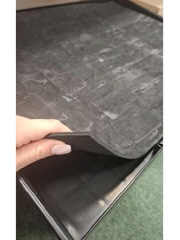
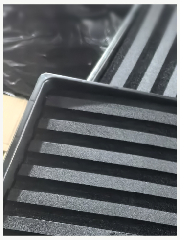
ESD injection-molded tray with an ESD IXPE foam insert
2. ESD PP Corrugated Box + Foam or Dividers
ESD PP corrugated boxes can be configured around the product dimensions and internal layout. EVA is suitable for structures requiring support or separation; IXPE works well for flexible, even protective lining; and lightweight EPE suits inserts and transit protection with a defined service cycle.
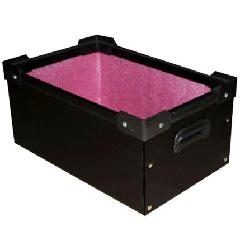
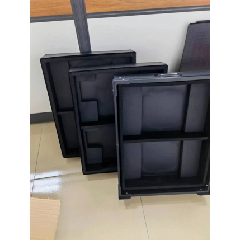
ESD PP corrugated box with an ESD IXPE cushioning insert
The choice between foam inserts, dividers, or a combination of both should be based on product weight, packing quantity, handling frequency, and budget—not simply on the material name.
3. Foam Tray + ESD PP Honeycomb Dividers
EVA or IXPE foam trays can be combined with ESD PP honeycomb dividers: the foam provides positioning, cushioning, and contact-surface protection, while the honeycomb dividers separate, support, and organize the load. The foam type, cell layout, and structure should be confirmed according to product weight, handling method, circulation frequency, and budget.
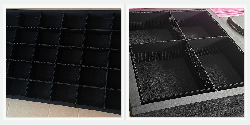
Left: ESD EVA foam tray with ESD PP honeycomb dividers; right: ESD IXPE foam tray with ESD PP honeycomb dividers
4. What Value Does the Customer Gain?
1. A More Rational Total Cost
The comparison should not be limited to the unit price of the foam or container. Total finished-product cost also reflects material usage, processing steps, loading quantity, operating efficiency, and the expected number of uses.
2. Smoother Loading and Unloading
Designing the product orientation, dividers, and inserts around the customer’s established handling practices can eliminate unnecessary steps and improve real-world operating efficiency.
3. ESD and Transport Safety Considered Together
A complete solution should address ESD protection, cushioning, positioning, stacking, and the transport environment, rather than meeting one parameter while overlooking overall protection.
4. Foam and Containers Designed Together
Yufa can integrate EVA, IXPE, or EPE foam with ESD injection-molded trays, ESD PP corrugated boxes, and ESD PP honeycomb structures according to project needs. Specific dimensions, structures, and material combinations are confirmed during project development.
5. How to Start a Project
• With product drawings: send the drawings and indicate the foam or container materials normally used.
• Without product drawings: describe the application and approximate dimensions, and Yufa can assist with the design.
|
Need an ESD packaging solution? Yufa Polymer Products Co., Ltd. Email: info@yufapolymer.com Website: www.yufapolymer.com |