
Where PVC and Rubber Fail ESD Compliance, What Should Engineers Choose?
Keywords: ESD UHMW-PE flooring, heavy-duty ESD mat, anti-static UHMW-PE sheet, ESD flooring for forklift traffic
Introduction: The Real Dilemma of ESD Flooring Materials
In the ESD protection field, flooring material selection has long been dominated by PVC rolls and epoxy resin coatings. For standard electronics assembly workshops with light loads, normal temperatures, and no chemical corrosion, these two materials are indeed reasonable choices.
But in real industrial environments, many ESD protection areas are not "standard":
· Warehouse aisles where forklifts and AGVs pass dozens of times daily—PVC wears through in 6-12 months
· Electrolyte splash zones in battery manufacturing—rubber mats corrode and swell within months
· Cold storage logistics at -30°C—PVC becomes brittle and cracks, losing ESD performance
· High-temperature spatter near welding stations—ordinary materials soften and deform
· Moving aisles for heavy equipment (>2 tons)—thin floor mats are crushed directly
The common characteristic of these scenarios is: ESD compliance is a hard requirement, but the severity of physical conditions far exceeds the tolerance of conventional flooring materials. Engineering decision-makers face a choice—either accept the high maintenance costs of frequent replacement, or find a material that truly meets both ESD protection and extreme physical performance requirements.
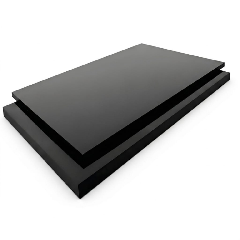
ESD-grade UHMW-PE (Ultra-High Molecular Weight Polyethylene) sheet is the solution designed for such scenarios.
The Nature of UHMW-PE: Why It Can Do What PVC Cannot
Molecular Weight Determines Everything
The "ultra-high molecular weight" of UHMW-PE refers to molecular weights between 1.5-6 million g/mol, which is 5-10 times that of ordinary HDPE (High-Density Polyethylene). The longer the molecular chains, the tighter the inter-chain entanglement, and the better the macroscopic properties:
|
Performance Indicator |
UHMW-PE |
HDPE |
PVC |
|
Abrasion Resistance (Taber) |
10-15mg |
80-120mg |
200-400mg |
|
Impact Strength (kJ/m²) |
≥100 (no break) |
20-30 |
5-10 |
|
Friction Coefficient |
0.10-0.22 |
0.30-0.40 |
0.40-0.50 |
|
Water Absorption |
<0.01% |
0.01-0.05% |
0.1-0.4% |
The core meaning of this data is: UHMW-PE's abrasion resistance is 15-40 times that of PVC, impact strength is 10-20 times that of PVC, and it barely absorbs water. In heavy-load rolling scenarios, this means multiplied service life.
ESD Performance: Stable Dissipation Independent of Humidity
ESD UHMW-PE achieves stable electrostatic dissipation performance by uniformly dispersing conductive fillers (carbon black system) in the substrate:
· Surface Resistance: 2.67 × 10⁷ Ω (measured value, compliant with ANSI/ESD S20.20 and IEC 61340 requirements)
· Volume Resistance: 1.27 × 10⁷ Ω·cm
· Static Decay Time: <2 seconds (±1000V → ±100V)
· Key Advantage: ESD performance does not depend on environmental humidity. PVC and rubber show significant ESD performance degradation in low-humidity environments (<30%RH), while UHMW-PE remains consistent in both dry and humid environments
This point is particularly important in North American and Northern European markets—during winter with indoor heating, relative humidity often drops below 20%, and the electrostatic dissipation capability of PVC and rubber-type ESD floor mats significantly decreases, while UHMW-PE is unaffected.
Temperature and Chemical Resistance
UHMW-PE's continuous service temperature range is -196°C to +80°C, far exceeding PVC (-10°C to +60°C) and rubber (-20°C to +70°C). In terms of chemical resistance, UHMW-PE has excellent resistance to acids, alkalis, salt solutions, and organic solvents, and is only sensitive to strong oxidizing acids (concentrated sulfuric acid, concentrated nitric acid).
Industry Analysis: Which Scenarios Truly Need ESD UHMW-PE Flooring
Not all ESD areas need UHMW-PE. The following screening logic is based on a core principle: customers must simultaneously face ESD compliance pressure and physical conditions that exceed the tolerance of conventional materials.
Scenario 1: Lithium Battery/Energy Storage Manufacturing
ESD Requirement Level: Safety-critical. Static sparks during cell production can ignite electrolyte vapor, making ESD protection not just product protection, but personnel safety.
Physical Conditions:
· Electrolyte contains hydrofluoric acid (HF), which is highly corrosive to PVC and rubber
· Frequent forklift traffic, aisle loads >1000kg/m²
· Some processes operate at temperatures >60°C
Why PVC/Rubber Fails: PVC shows surface powdering and discoloration within months in HF environments; rubber swells and softens. Replacement frequency is high, and production downtime losses during replacement far exceed material costs.
UHMW-PE Advantage: HF-resistant, abrasion-resistant, temperature-resistant, service life of 5-10 years. Battery capacity in Europe and America is rapidly expanding (Northvolt, ACC, PowerCo in Europe, multiple GW-scale factories in the US), with strict ESD compliance requirements—a high-growth target market.
Scenario 2: Automotive Electronics Manufacturing (EV-Related)
ESD Requirement Level: Quality-critical. ECUs, BMS, inverters, and vehicle sensors are ESD-sensitive, and IATF 16949 requires suppliers to establish ESD control programs.
Physical Conditions:
· High automation level, frequent AGV and cart traffic
· Welding stations have high-temperature spatter and oil
· Movement of large fixtures and equipment (single unit >500kg)
Why PVC/Rubber Fails: AGV traffic creates concentrated wheel pressure, causing PVC rolls to develop indentations and tears under heavy loads. Welding spatter leaves permanent burn marks on PVC surfaces, destroying the ESD pathway.
UHMW-PE Advantage: High load-bearing, self-lubricating (AGV wheels don't slip), welding spatter-resistant. European and American automotive Tier 1/Tier 2 suppliers face significant ESD audit pressure and are willing to pay premiums for reliability.
Scenario 3: Semiconductor Back-End Packaging and Testing
ESD Requirement Level: Highest. Chip packaging and testing processes are extremely sensitive to ESD, where electrostatic damage can cause chip failure or reliability degradation (latent defects).
Physical Conditions:
· Packaging equipment can weigh several tons, creating extreme concentrated loads on flooring
· Cleanroom environments require low particle generation from flooring materials
· Frequent chemical cleaning maintenance
Why PVC/Rubber Fails: Thin PVC develops indentations under heavy equipment, which collect dust and fail cleanliness requirements. Rubber surfaces age under repeated chemical cleaner wiping.
UHMW-PE Advantage: High load-bearing without deformation, low particle generation, chemical cleaning-resistant. Semiconductor back-end operations in Europe and America (Intel, TI, Infineon, etc.) have extremely high flooring material requirements—once validated, procurement volumes are large and stable.
Scenario 4: Aerospace Electronics Assembly
ESD Requirement Level: Highest + Traceability. Aerospace ESD standards (ANSI/ESD S20.20 + NASA standards) require complete ESD control records and material certification.
Physical Conditions:
· Aerospace-grade cleaning agents are highly corrosive
· Frequent equipment movement, flooring must be scratch-resistant
· Some areas require high-low temperature cycling resistance
UHMW-PE Advantage: Chemical cleaning-resistant, high abrasion resistance, wide temperature adaptability. Aerospace supply chains have high material certification requirements, but once entering the qualified supplier list, partnerships are stable.
Scenario 5: Data Centers/Critical Infrastructure
ESD Requirement Level: Equipment protection. Servers, switches, and storage devices are ESD-sensitive, where electrostatic discharge can cause data loss or hardware damage.
Physical Conditions:
· Individual cabinet weight >1 ton, requiring high load-bearing support under raised floors
· Equipment moving aisles need heavy-load resistance
· Long-term maintenance-free requirements (data centers cannot tolerate frequent maintenance downtime)
UHMW-PE Advantage: High load-bearing, long-life maintenance-free, stable ESD performance. Data center construction continues to grow in Europe and America, with extremely high requirements for reliability and maintenance-free operation.
Flooring Installation Technical Guide
Thickness Selection
|
Load Type |
Recommended Thickness |
Typical Scenarios |
Load Range |
|
Light Load |
5-8mm |
Pedestrian aisles, standard workstations |
<200 kg/m² |
|
Medium Load |
10-15mm |
Electronics assembly, cleanrooms |
200-500 kg/m² |
|
Heavy Load |
15-25mm |
Forklift/AGV aisles, warehouses |
500-2000 kg/m² |
|
Ultra-Heavy Load |
25-50mm |
Mining, large machinery bases |
>2000 kg/m² |
For the five target scenarios above, 10-25mm is the most commonly used thickness range. Specific selection should be based on actual load types (static vs. dynamic loads, distributed vs. concentrated loads).
Substrate Preparation Key Points
1. Flatness: Floor flatness deviation ≤3mm/2m; uneven areas require self-leveling treatment
2. Moisture Content: Concrete substrate moisture content ≤8%; newly poured concrete requires ≥28 days curing
3. Grounding Grid: Copper foil grounding grid must be embedded before installation (spacing 1.5m×1.5m or 3m×3m), connected to factory grounding system (grounding resistance <10Ω)
4. Adhesive: Conductive adhesive recommended (surface resistance 10⁴-10⁶Ω) to ensure electrostatic pathway between sheet and substrate
Thermal Expansion Treatment (Critical)
UHMW-PE's linear thermal expansion coefficient is 1.5×10⁻⁴/°C, which is 12 times that of steel. This is the most overlooked and most failure-prone factor during installation.
Installation rules that must be :
· Expansion gap between sheets: 3-5mm per meter
· Use slotted holes for fastening (allowing free sheet expansion/contraction)
· Do not use rigid fastening (otherwise sheets will warp and crack in high-temperature environments)
· Sheets must be placed in the installation environment for 24+ hours to acclimate before installation
TCO Analysis: Why ESD UHMW-PE's Higher Initial Price Is Justified
The following compares the total cost of three ESD flooring materials over a 5-year usage cycle, using a forklift aisle scenario as an example:
|
Cost Item |
PVC Roll |
Rubber Mat |
ESD UHMW-PE |
|
Material Unit Price ($/m²) |
15-25 |
20-35 |
40-60 |
|
Service Life |
6-12 months |
12-18 months |
5-10 years |
|
Replacement Times in 5 Years |
4-9 times |
2-3 times |
0 times |
|
5-Year Material Total Cost ($/m²) |
75-225 |
40-105 |
40-60 |
|
Downtime Loss per Replacement ($) |
500-2000 |
500-2000 |
0 |
|
5-Year TCO ($/m²) |
2075-18225 |
1040-6200 |
40-60 |
Data source: Based on actual cost estimates from European and American industrial flooring projects. Downtime losses include production line stoppage, equipment relocation, and reinstallation labor and time costs.
Conclusion: ESD UHMW-PE's initial unit price is 2-3 times that of PVC, but the 5-year TCO may only be 1/10 to 1/30 of PVC. For production lines that cannot tolerate frequent downtime, this difference is even more significant.
Why Choose YUFA POLYMER
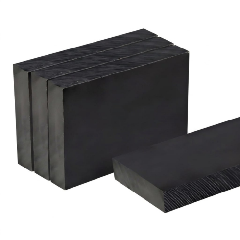
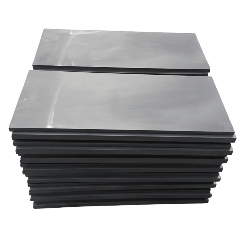
YUFA POLYMER specializes in the R&D and production of ESD-grade UHMW-PE sheets, with the following core capabilities:
· Material Self-Control: Full-process production from raw material formulation to finished sheets, ensuring ESD performance consistency and traceability
· Thickness Range Coverage: 5-200mm, meeting needs from light loads to ultra-heavy loads
· Standard Sizes: 1000×2000mm and 1200×2400mm, with custom cutting support
· 100% Virgin Material: No recycled materials used, ensuring stable performance
· Complete ESD Test Reports: Surface resistance, volume resistance, static decay time
· Grounding System Support: Grounding snaps, grounding cords, 1MΩ resistor cords
We understand that as ESD material processors and distributors, you need reliable suppliers, stable quality, and complete technical support. This is our core value proposition.
Contact Us
If you are looking for heavy-duty/extreme environment ESD flooring solutions for end customers, we can provide:
· Free sample testing (with ESD test reports)
· Technical selection support (recommending thickness and specifications based on load and environment)
· Installation technical guidance
· OEM/ODM customization services
· Bulk purchase preferential pricing
Email: info@yufapolymer.com
Web: www.yufapolymer.com
Location: Shenzhen, China