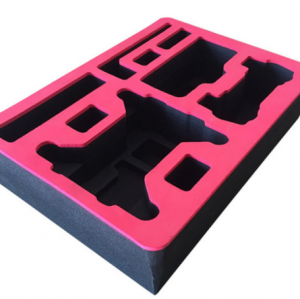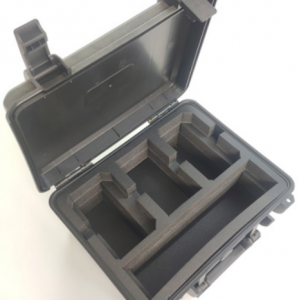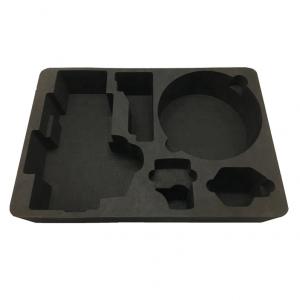

No rush to talk about new tooling — match the usable internal size, height and accessories to the closest existing specification
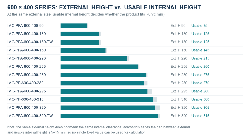
Figure 1 Yufa’s 12 existing 600 × 400 models: external height vs. usable internal height. The chart is for screening only; dimensions and structures are subject to the corresponding product code.
01 Start with existing sizes | 02 All 12 heights | 03 Setting the height | 04 Lids · dividers · label holders | 05 When the box is slightly too large | 06 When new tooling makes sense | 07 Resistance, model by model
Customers who ask about ESD injection-moulded boxes usually do not need a brand-new box. They already know the product dimensions, the loading quantity and the handling method; what they want is to reach a size and structure close to their requirement in the shortest possible time. Rather than starting a new-tooling quotation, a far more efficient route is to take the product dimensions, loading quantity, circulation practice and ESD requirement, compare them against Yufa’s existing moulded sizes, and then complete the solution with a lid, dividers, label holders or foam.
|
Key takeaway | New tooling is not step one. Yufa screens its existing injection moulds for the closest size first, then completes the fit with foam, dividers or a lid, which helps customers avoid unnecessary tooling. Other custom options are discussed only when the existing sizes clearly cannot meet the requirement. |
1. Why customers always search 600 × 400 first
600 × 400 is the modular size of the European standard tote: on a 1200 × 800 mm Euro pallet, four boxes fit on each layer, and it is the format most easily reused in electronics warehouses, trolleys and shelving. That is why it so often becomes the first search term for buyers — a starting point, not a calculated conclusion.
The problem is that boxes all labelled 600 × 400 differ widely in usable internal space, wall structure, and whether a lid or dividers can be fitted. Ordering by external dimensions alone is the most common cause of rework — the goods arrive only to reveal that the product does not fit, or leaves far too much clearance on all sides.
2. Yufa already has 12 sizes in 600 × 400
The table below lists every model in the current range whose external dimensions are 600 × 400, ordered by height. They belong to two ESD material families and cover nine external heights from 90 to 320 mm, including thin-wall versions and one collapsible structure.
|
Product code |
External size L×W×H (mm) |
Usable internal size (mm) |
Net weight (kg) |
Material · surface resistance |
Structure and available accessories |
|
IMC-PPA-600-400-90 |
600 × 400 × 90 |
560 × 360 × 85 |
1.78 |
ESD PP alloy 10⁴ – 10⁸ Ω |
Lid, dividers |
|
IMC-PPA-600-400-130 |
600 × 400 × 130 |
560 × 360 × 125 |
1.95 |
ESD PP alloy 10⁴ – 10⁸ Ω |
Lid, dividers, label holder |
|
IMC-PPA-600-400-130-TW |
600 × 400 × 130 |
555 × 355 × 125 |
2.07 |
ESD PP alloy 10⁴ – 10⁸ Ω |
Thin-wall version; lid, dividers |
|
IMC-PPA-600-400-150 |
600 × 400 × 150 |
560 × 360 × 145 |
2.30 |
ESD PP alloy 10⁴ – 10⁸ Ω |
Lid, dividers, label holder |
|
IMC-PPA-600-400-220 |
600 × 400 × 220 |
560 × 360 × 215 |
3.15 |
ESD PP alloy 10⁴ – 10⁸ Ω |
Lid, dividers, label holder |
|
IMC-PPA-600-400-255 |
600 × 400 × 255 |
560 × 360 × 250 |
3.26 |
ESD PP alloy 10⁴ – 10⁸ Ω |
Lid, dividers, label holder |
|
IMC-PPA-600-400-280 |
600 × 400 × 280 |
560 × 360 × 275 |
3.05 |
ESD PP alloy 10⁴ – 10⁸ Ω |
Lid, dividers, label holder |
|
IMC-PP-600-400-280 |
600 × 400 × 280 |
560 × 360 × 270 |
2.80 |
ESD PP 10⁵ – 10⁹ Ω |
Standard structure; accessories to be confirmed per project |
|
IMC-PPA-600-400-295 |
600 × 400 × 295 |
560 × 360 × 280 |
3.80 |
ESD PP alloy 10⁴ – 10⁸ Ω |
Lid, dividers |
|
IMC-PP-600-400-310 |
600 × 400 × 310 |
550 × 360 × 300 |
3.50 |
ESD PP 10⁵ – 10⁹ Ω |
Collapsible structure; accessories to be confirmed per project |
|
IMC-PPA-600-400-320 |
600 × 400 × 320 |
560 × 360 × 305 |
3.76 |
ESD PP alloy 10⁴ – 10⁸ Ω |
Lid, dividers |
|
IMC-PPA-600-400-320-TW |
600 × 400 × 320 |
555 × 355 × 315 |
3.78 |
ESD PP alloy 10⁴ – 10⁸ Ω |
Thin-wall version; lid, dividers, label holder |
Three patterns in this table are more useful than reading each model one by one:
• Usable internal height is not the same as external height. Across this series the difference ranges from 5 to 15 mm (mostly 5 mm, but 15 mm on the 295 mm and 320 mm models), so calculating with one fixed allowance will fail on the tight cases.
• The internal base is not uniform either. Apart from the thin-wall versions at 555 × 355 mm and the collapsible version at 550 × 360 mm, the rest are 560 × 360 mm — check whether the product’s length and width drop in first, and discuss height afterwards.
• The same external height can cover two models. 600 × 400 × 280, for example, exists as both IMC-PPA-600-400-280 and IMC-PP-600-400-280; the material and surface resistance ranges differ, so the order must be confirmed by product code.
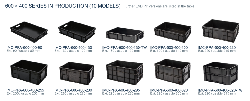
Figure 2 The 600 × 400 series in production (10 models, ordered by external height). The images illustrate product form only; dimensions and structures are subject to the corresponding product code.
3. When the external size is slightly off: close specifications worth checking first
If 600 × 400 is only “roughly in this range” rather than a strict pallet-module requirement, the models below deserve to be in the comparison — all are existing moulds, so nothing starts from zero.
|
Product code |
External size (mm) |
Usable internal size (mm) |
Features and available accessories |
|
IMC-PPA-590-390-205 |
590 × 390 × 205 |
530 × 330 × 200 |
Moderate depth; optional lid and dividers |
|
IMC-PP-590-390-205-LID |
590 × 390 × 205 |
540 × 340 × 198 |
Lid supplied with the box |
|
IMC-PPA-600-395-140 |
600 × 395 × 140 |
560 × 350 × 135 |
Low box for easy access; optional dividers |
|
IMC-PPA-605-365-135 |
605 × 365 × 135 |
560 × 325 × 125 |
Optional lid, dividers, extension frame |
|
IMC-PPA-590-420-165 |
590 × 420 × 165 |
555 × 390 × 160 |
Optional dividers, extension frame, label holder |
|
IMC-PPA-575-360-183 |
575 × 360 × 183 |
525 × 335 × 172 |
Slotted side walls; optional lid |
Where extra clear height is needed, start with the two models that accept an extension frame (605 × 365 × 135 and 590 × 420 × 165). Where a smaller companion box is needed to mix with 600 × 400, the same range also offers a 400 × 300 series.
4. Setting the height: the three most common mistakes
1. Check the base before the height.
First fit the product’s footprint into 560 × 360 (or 555 × 355 for thin-wall versions) and confirm it drops in; only then discuss height. Doing it the other way round tends to push the box height up unnecessarily.
2. Calculate the number of layers from the usable internal height.
When several layers are stacked, divide the usable internal height by the single-part height — not the external height. Watch the orientation inside the box as well: whether a part can be removed from the side often limits the quantity more than the height does.
3. Allow for the lid and for stacking.
A lid takes up headroom when the box is transported closed, and nested empty boxes stack to a different height than loaded ones. If dividers or foam go inside, their thickness must be counted as well.
5. Accessories: lids, dividers, label holders
All 10 PP alloy models in this series can take a lid and dividers; label holders can be added to the five standard-wall models at 130, 150, 220, 255 and 280 mm and to the thin-wall 320 mm version. Which accessories to take depends on how the goods will travel:
• Dust protection, closed stacking or transport outside the plant: confirm the lid.
• Several parts in one box that must not knock against each other: confirm dividers (moulded dividers or die-cut slots are both available).
• Visual management, batch traceability or kanban: confirm the label holder.
• The 600 × 400 series has no extension frame of its own. If more clear height is genuinely required, choose one of the two box bodies in the previous section that already accept an extension frame rather than improvising height on site.
6. When the existing box is slightly too large: fill the gap with foam and dividers instead of changing the box
“Close enough” is in fact the normal case. When the box is slightly too large, working through the following sequence is usually sufficient:
• The product fits but there is slight clearance around it: use EVA, IXPE or EPE foam as a locating insert, solving positioning and cushioning in one step.
• Several products in one box: moulded dividers, die-cut slots or foam partitions — the priority is to fix each cell size and the loading/removal direction.
• Dust protection, stacking or visual management: check that the lid, label holder and stacking method are compatible with each other.
• Only when existing sizes are clearly unsuitable should other custom options be considered, rather than entering a new-tooling process from the outset.
7. When new tooling genuinely enters the discussion
Yufa screens existing moulds for a close specification first to help customers avoid unnecessary tooling. This is a screening sequence, not a promise — in practice a few situations do push a project towards customization:
• The existing usable internal size clearly will not accommodate the product, or it only just fits and the loading/removal method then fails.
• Nesting, stacking or automated feeding conflicts with the structure of the existing box.
• A specific positioning, retaining or poka-yoke feature is required, and the volume is high enough to justify the tooling investment.
Only in these cases is tooling worth discussing. Otherwise, looking for the answer within the existing sizes is usually faster and cheaper.
8. Surface resistance must be confirmed model by model
This series contains only injection-moulded parts with an ESD function, across two material families: ESD PP alloy with a surface resistance of 10⁴ – 10⁸ Ω, and ESD PP with 10⁵ – 10⁹ Ω. Material and resistance range are bound to a specific model — not every size is available in both ranges.
The typical example is 600 × 400 × 280: IMC-PPA-600-400-280 belongs to the PP alloy family (10⁴ – 10⁸ Ω), while IMC-PP-600-400-280 belongs to the other family (10⁵ – 10⁹ Ω). They look alike but cannot share one data sheet. Until a TDS or test data supports a claim, conductive, permanent ESD or a specific standard number should not be used as the main marketing message.
9. Let the product code carry the inquiry
Once a close specification is found, sending the code to Yufa is all it takes to confirm usable internal dimensions, accessories and the foam solution. Each existing code already states the category, material segment, external size and key structure:
|
IMC-PPA-600-400-150 Injection-moulded box | ESD PP alloy | external size 600 × 400 × 150 mm | standard wall IMC-PPA-600-400-130-TW Injection-moulded box | ESD PP alloy | external size 600 × 400 × 130 mm | -TW thin-wall version IMC-PP-600-400-310 Injection-moulded box | ESD PP | external size 600 × 400 × 310 mm | collapsible structure |
A product code shortens the communication path but does not replace project confirmation: usable internal dimensions, stacking method, accessory combination and resistance grade still have to be checked against the specific model before ordering.
10. Frequently asked questions
Q: Do we have to open a new mould to buy an ESD injection-moulded box?
A: Usually new tooling does not need to be the first step. Yufa looks for the closest size and structure within the existing moulded range first; other custom possibilities are discussed only when the existing sizes clearly cannot meet the requirement.
Q: Should the box be selected by external or by usable internal dimensions?
A: External dimensions make searching easier, but the usable internal dimensions decide whether it actually works. In this 600 × 400 series the internal base ranges from 550 × 360 to 560 × 360 mm, and the difference between usable internal height and external height is 5–15 mm, so no single fixed figure can be used to calculate it.
Q: Is there a 600 × 400 version supplied with a lid?
A: Yes. All 10 PP alloy models can take a lid; if a lid delivered with the box is required in another size, the same range also offers a version supplied with a lid (for example IMC-PP-590-390-205-LID at 590 × 390 × 205 mm).
Q: Can injection-moulded trays be fitted with dividers?
A: Yes. Injection-moulded trays also include structures that accept dividers (for example models with slots in the inner walls). When selecting, confirm each cell’s clear size together with the loading and removal direction — more reliable than judging by outline alone.
Q: What is the difference between an ESD tray and an ESD tote box?
A: A tray is usually shallower and is used for process transfer, positioning and batch placement; a tote box has higher walls and is used for handling, storage, stacking and repeated circulation. Distinguishing them by how they are used is more practical than by name.
Q: How many 600 × 400 boxes fit on one 1200 × 800 pallet?
A: Four per layer by the module; the actual number of layers and total height still depend on whether lids are used, the stacking method and the load limit of the full pallet.
Q: Can foam be added to an existing box?
A: EVA, IXPE or EPE foam can be evaluated per project for positioning, cushioning and contact-surface protection; Yufa can deliver an integrated design covering the box body, dividers and foam together.
11. How to start the selection
If a close specification has already been identified, simply send the product code and the estimated quantity; if not, provide the following to Yufa:
• Product dimensions, or the usable internal dimensions you require
• Loading quantity and weight per part
• Application: handling, storage, process transfer or line-side picking
• Whether a lid, dividers, label holders or foam are needed
• Target ESD requirement and any other mandatory conditions
|
Send these points to Yufa and start from the existing moulds. We screen the existing moulded sizes for the closest option first and confirm usable internal dimensions, accessories and foam in the same pass, rather than pushing the project to new tooling at the outset. |