
ESD (Electrostatic Dissipative) Acrylic Sheet
Technical Data Sheet
Document No.: TDS-ESD-PMMA-001 Revision: Rev 1.0 Release Date: 2025-06-23
■ Product Overview
The ESD Acrylic Sheet is based on polymethyl methacrylate (PMMA) substrate, coated with a transparent conductive layer (cross-linked polymer coating) on the surface. While retaining the excellent optical properties and mechanical strength of PMMA, the coating provides the sheet with permanent and stable electrostatic dissipative functionality. The coating is of permanent design; ESD performance is unaffected by ambient humidity and requires no periodic re-coating.
The product is widely used in cleanroom construction and electrostatic protection in industries including semiconductor, LCD/OLED, electronic equipment, precision instruments, pharmaceutical, and bioengineering.
Key Features
• Permanent Electrostatic Dissipation: Surface resistance 10⁶~10⁸ Ω/sq; ESD performance unaffected by humidity, temperature, or time
• Rapid Static Decay: Static decay time < 0.05 seconds (standard limit 2 seconds), far exceeding industry requirements
• Triboelectric Resistance: No charge accumulation from contact-separation processes when properly grounded
• High Light Transmittance: Transparent type light transmittance ≥90%, minimal optical distortion, meeting precision observation needs
• Superior Surface Hardness: Cross-linked polymer coating with significantly better scratch and abrasion resistance than standard PMMA
• Uniform Surface Treatment: No conductive discontinuities (“hot spots”), preventing localized static accumulation
• Lightweight & High Strength: Density ~1.19 g/cm³, approximately half the weight of same-thickness glass; impact resistance 15 times that of same-thickness tempered glass
• Flame Rating: UL-94 HB, meeting general industrial fire protection requirements
■ Technical Parameters
|
Property |
Value |
Test Method / Standard |
Remarks |
|
Surface Resistivity |
10⁶ ~ 10⁸ Ω/sq |
ANSI/ESD S4.1 |
Core indicator |
|
Static Decay Time |
< 0.05 s |
Fed. Test Std 101C Method 4046-1 |
Only 2.5% of the standard limit |
|
Light Transmittance (Clear) |
≥90% |
ASTM D1003 |
Close to standard PMMA level |
|
Density |
~1.19 g/cm³ |
ISO 1183 |
Approximately half that of glass |
|
Heat Deflection Temperature |
~80°C (1.8 MPa) |
ASTM D648 |
Do not exceed 80°C for prolonged use |
|
Coefficient of Thermal Expansion |
6.0×10⁻⁵ /°C |
— |
Allow expansion gaps for large-area installations |
|
Impact Strength |
15× tempered glass |
— |
Unnotched impact |
|
Flame Rating |
UL-94 HB |
UL-94 |
Basic flame rating |
|
Surface Hardness |
Significantly better than standard PMMA |
Pencil Hardness Test |
Cross-linked coating provides scratch resistance |
|
Uniformity |
No conductive discontinuities |
— |
Prevents localized “hot spots” |
|
Humidity Dependence |
None |
— |
Key differentiator from additive-type antistatic materials |
|
Chemical Resistance |
Resistant to weak acids & dilute alkalis |
— |
Solvents such as acetone will attack the substrate |
■ Available Specifications
4.1 Standard Sizes & Thicknesses
|
Standard Size |
Available Thicknesses |
|
1000 mm × 2000 mm |
2 / 3 / 4 / 5 / 6 mm |
|
1212 mm × 2424 mm |
8 / 10 / 12 / 15 / 20 mm |
|
48” × 96” (1220×2440 mm) |
Customizable upon request |
4.2 Thickness Selection Guide
|
Thickness |
Application Scenario |
Typical Uses |
|
3~5 mm |
High-precision scenarios |
Semiconductor inspection, SMT fixtures, chip trays |
|
6~8 mm |
Equipment windows / observation panels |
Cleanroom equipment covers, instrument panels |
|
8~12 mm |
Large partitions / cleanrooms |
Cleanroom space dividers, corridor windows |
4.3 Available Colors
|
Color |
Optical Properties |
Application Scenarios |
|
Clear |
Transmittance ≥90%, highest clarity |
General observation windows, cleanroom viewports |
|
Amber |
Reduces glare, softens vision |
High-brightness environments, display shielding covers |
|
Blue |
Visual differentiation, aesthetic labeling |
Equipment identification windows, functional zoning |
|
Yellow |
Can filter out ultraviolet (UV) |
Lithography areas, light-sensitive process zones |
■ Application Areas
5.1 Semiconductor & Microelectronics Manufacturing (Core Market)
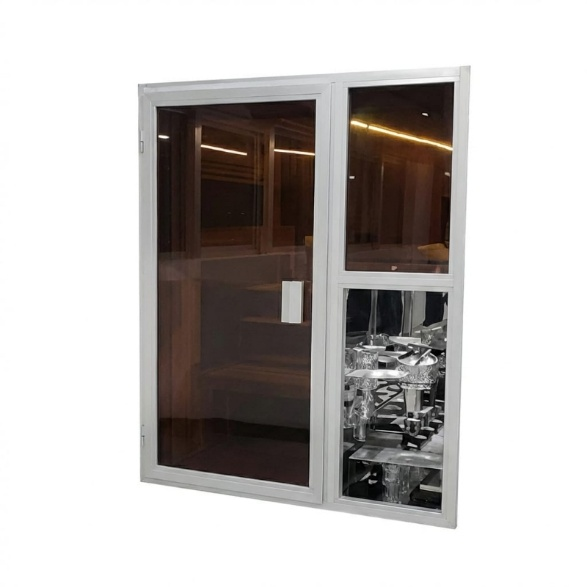
• Cleanroom windows & doors: Prevents electrostatic adsorption of particulate contamination on wafers
• Equipment covers / observation windows: External isolation for lithography, etching, deposition processes
• Chip trays / carriers: Prevents ESD-induced immediate or latent damage to chip circuits
• Mini-environment panels: ESD protection for wafer transfer channels
5.2 LCD / OLED Display Manufacturing
• LCD production line partitions and observation windows
• Dust-proof covers for backlight module assembly areas
• Fixtures and protective covers for panel inspection stations
5.3 Electronics Assembly & SMT
• SMT production line fixtures and test jigs (ICT / FCT)
• Conveyor line protective covers and equipment windows
• Explosion-proof shields (prevents ESD spark ignition)
5.4 Pharmaceutical, Biotech & Precision Optics
• GMP cleanroom partitions, biosafety cabinet observation windows
• Dust-proof covers for pharmaceutical packaging areas (anti-static, dust-repellent, easy to clean)
• Optical instrument assembly area protective covers, laser equipment protective windows (yellow UV-filtering type)
■ Fabrication Guide
|
Process |
Suitability |
Description |
|
CNC Engraving / Cutting |
★ Suitable |
Standard acrylic cutting tools and parameters can be used |
|
Laser Cutting |
★ Suitable |
Clean cut edges, no secondary processing required |
|
Drilling |
★ Suitable |
Standard drill bits; low speed recommended to avoid cracking |
|
Bonding |
★ Suitable (pre-treatment required) |
Bonding surfaces must be mechanically abraded to remove the coating before bonding |
|
Screen Printing / Spray Coating |
★ Suitable |
Secondary surface decoration is possible |
|
Thermoforming |
✖ Not Suitable |
Coating is a rigid cross-linked structure; thermoforming will cause cracking and failure |
■ Standards & Certification Reference
• ANSI/ESD S20.20: ESD control program standard
• IEC 61340-5-1: International standard for ESD protection of electronic devices
• ANSI/ESD S4.1: Standard for surface resistance testing of electrostatic dissipative materials
• Federal Test Standard 101C, Method 4046-1: Static decay testing
• UL-94 HB: Flame rating certification
• ASTM D1003: Light transmittance testing standard
■ Storage & Handling Precautions
• Storage Environment: Store in a dry environment at room temperature; avoid high temperature (>80°C), high humidity, and direct sunlight
• Surface Protection: Double-sided protective film applied; remove only after installation is complete to avoid coating scratches
• Cleaning Method: Use a soft, lint-free cloth for wiping; do not use organic solvents such as acetone or toluene
• Grounding Requirements: Sheets must be effectively grounded through a conductive frame or conductive path to ensure ESD dissipative function
• Bonding Process: Bonding surfaces must be mechanically abraded to remove the coating; otherwise bond strength cannot be guaranteed
• Cutting Notes: Keep the protective film on during processing; remove only after completion to reduce the risk of surface scratches
■ Material Comparison
|
Parameter |
ESD PMMA |
ESD PC |
ESD PVC |
|
Surface Resistance |
10⁶~10⁸ Ω |
10⁶~10⁹ Ω |
10⁶~10⁸ Ω |
|
Light Transmittance |
≥90% |
~88% |
~75% |
|
Impact Resistance |
15× glass |
250× glass |
Moderate |
|
Temperature Resistance |
~80°C |
~125°C |
~60°C |
|
Humidity Dependence |
None |
None |
None |
|
Cost |
Low |
High |
Moderate |