
An Underrated Productivity Investment
Keywords: ESD anti-fatigue mat, ergonomic ESD mat, anti-static floor mat, ESD flooring
Introduction: The Hidden Costs of Standing Fatigue
In production facilities across electronics manufacturing, semiconductor fabrication, and precision instrumentation industries, frontline workers stand at their workstations for 8-12 hours daily. Prolonged standing on concrete or hard epoxy flooring not only causes physical fatigue but also leads to a series of hidden costs:
· Rising absenteeism: Leave due to back pain, plantar fasciitis, and varicose veins
· Increased workplace injuries: Operational errors and accidents caused by fatigue
· Declining productivity: 10-15% reduction in work efficiency under fatigued conditions
· High turnover: Poor working conditions accelerate employee departure
However, in electrostatic sensitive (ESD) environments, selecting the right anti-fatigue mat is not easy. Standard anti-fatigue mats are often made from insulating foam materials that actually accumulate static charges, posing a threat to sensitive electronic components. This raises a core technical challenge: how to provide truly effective ergonomic support while ensuring electrostatic protection?
Core Technical Challenge: The Contradiction Between ESD Protection and Ergonomics
Why Standard Anti-Fatigue Mats Cannot Be Used in ESD Environments?
The core material of traditional anti-fatigue mats is polyurethane (PU) foam or rubber foam. These materials offer excellent cushioning performance but are also excellent electrical insulators (surface resistance typically >10¹² Ω). Using such insulating mats in ESD-sensitive areas leads to the following problems:
· Static charges generated by human walking cannot dissipate to ground through the mat
· Static charges accumulate on personnel and workstations, potentially reaching thousands of volts
· When electrostatic discharge (ESD) occurs, instantaneous current may damage sensitive electronic components
· Violates ESD protection standards such as ANSI/ESD S20.20 and IEC 61340-5-1
Technical Solution for ESD Anti-Fatigue Mats
True ESD anti-fatigue mats require dual breakthroughs in materials science and structural design:
1. 1. Conductive/Dissipative Material System
By adding conductive fillers (such as carbon black or conductive fibers) to the foam substrate, surface resistance is controlled within the range of 10⁴-10⁹ Ω. This resistance range ensures safe dissipation of static charges (avoiding rapid discharge that could damage components) without creating electric shock risks from excessive conductivity.
2. 2. Integrated Grounding System
The mat must be equipped with reliable grounding connection points that channel static charges to the facility grounding system through ground cords. The grounding system resistance should be <1MΩ to ensure rapid charge dissipation.
3. 3. Multi-Layer Structural Design
Typical ESD anti-fatigue mats use multi-layer composite structures:
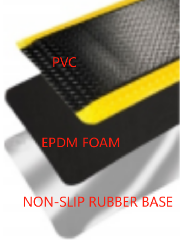
· Top layer: ESD dissipative PVC or rubber, providing electrostatic protection and wear-resistant surface
· Middle layer: High-density polyurethane foam, providing cushioning support and anti-fatigue performance
· Bottom layer: Conductive primer or conductive layer, ensuring overall electrostatic pathway
· Grounding system: Built-in grounding snaps or ground cord connection points
Industry Data: Return on Investment for Anti-Fatigue Mats
The investment value of anti-fatigue mats is not theoretical speculation but supported by solid industry data. Wearwell, a well-known American industrial mat manufacturer, conducted a 2-year tracking study comparing key metrics before and after installing anti-fatigue mats at a manufacturing facility.
Research Background
Before installing anti-fatigue mats, this manufacturing facility faced serious standing fatigue problems:
· Absenteeism rate: 5.2% annually
· Injury rate: 3 incidents per month
· Employee fatigue self-assessment: 31% rated 4/5 (noticeable fatigue), 69% rated 5/5 (extreme fatigue)
Implementation Measures
Wearwell conducted a comprehensive assessment of the facility, equipped all standing workstations with anti-fatigue mats, and implemented a systematic matting program.
Quantitative Results (2-Year Tracking)
|
Metric |
Before |
After |
|
Absenteeism Rate |
5.2% |
4.0% (23% reduction) |
|
Injury Rate |
3/month |
70% reduction |
|
Fatigue Rating 4/5 |
31% |
0% |
|
Fatigue Rating 1/5 (No Pain) |
0% |
39% |
Data source: Wearwell, "How to Reduce Absenteeism with Workplace Mats", wearwell.com/blog, July 2025
This study clearly demonstrates: anti-fatigue mats are not just an employee welfare investment but a productivity investment with clear ROI. A 23% reduction in absenteeism and 70% reduction in injury rates directly translate to cost savings and efficiency improvements for the enterprise.
Technical Specifications of ESD Anti-Fatigue Mats
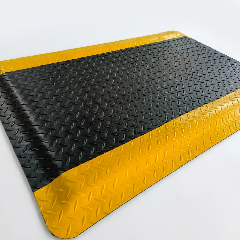
Taking YUFA POLYMER's ESD-ATFMWG model as an example, a typical ESD anti-fatigue mat should have the following technical specifications:
|
Parameter |
Specification |
|
Material Structure |
PVC top layer + high-density polyurethane foam + anti-slip primer layer |
|
Thickness |
15-20mm (providing optimal cushioning support) |
|
Surface Resistance |
10⁴ ~ 10⁹ Ω (meeting ESD protection requirements) |
|
ESD Compliance Standard |
ANSI/ESD S20.20 / IEC 61340 |
|
Grounding System |
2 grounding snaps per mat, customizable |
|
Durability |
High wear resistance, oil-proof, easy to clean |
|
Color |
Black + yellow (safety warning) or customizable |
|
Size |
Customizable |
Grounding System: The Lifeline of ESD Anti-Fatigue Mats
The electrostatic protection performance of ESD anti-fatigue mats completely depends on a reliable grounding system. An ESD mat without proper grounding is no different from an insulating mat.
Key Elements of the Grounding System
· Grounding snaps/terminals: Metal connection points embedded in the mat, typically 2 per mat
· Ground cord: Conductor connecting grounding snaps to the facility grounding system, usually equipped with a 1MΩ current-limiting resistor
· Facility grounding system: Independent grounding network compliant with ESD standards, grounding resistance should be <1MΩ
· Regular testing: Periodically verify the overall resistance of the mat-grounding system using a surface resistance tester
Grounding System Installation Guidelines
· Ground cord length should be as short as possible to avoid excessive resistance from long wires
· Grounding connection points should be away from high-traffic areas to prevent mechanical damage
· Each mat's grounding system should be independently connected to the grounding bus, avoiding series connections
· Use dedicated ESD ground cords with built-in 1MΩ current-limiting resistors to protect personnel safety
· System resistance testing must be performed after installation to ensure overall resistance <1MΩ
Compliance Standards and Certifications
ESD anti-fatigue mats must comply with the following international standards and industry specifications:
ANSI/ESD S20.20
This is the most widely adopted ESD protection standard in North America, providing systematic requirements for ESD Control Programs. The standard specifies:
· Surface resistance in ESD work areas should be controlled within the 10⁶-10⁹ Ω range
· Static decay time should be <2 seconds (from ±1000V to ±100V)
· Regular testing and documentation systems must be established
· All ESD mats must be properly grounded
IEC 61340-5-1
This is the ESD protection standard published by the International Electrotechnical Commission (IEC), similar to ANSI/ESD S20.20 but with some differences in test methods. This standard is widely adopted globally, especially in European and Asian markets.
Test Methods
Key tests for ESD anti-fatigue mats include:
· Surface resistance test (ASTM D257 / IEC 61340-4-1): Measuring the resistance value of the mat surface
· Point-to-point resistance test: Verifying resistance uniformity across the mat surface
· System resistance test: Measuring the overall resistance from the mat surface through the grounding system to earth
· Static decay test: Measuring the speed of static charge dissipation from the mat surface
Typical Application Scenarios
Electronics Assembly Production Lines
This is the most typical application scenario for ESD anti-fatigue mats. At workstations such as PCB assembly, component insertion, and soldering inspection, employees usually need to stand for extended periods. ESD anti-fatigue mats simultaneously address two core issues:
· Protecting sensitive electronic components from electrostatic damage
· Reducing employee standing fatigue, improving production efficiency and product quality
Semiconductor Manufacturing
Semiconductor wafer fabrication and packaging/testing processes have extremely high ESD protection requirements. In cleanroom environments, ESD anti-fatigue mats need to meet additional requirements:
· Low particle generation: Mat surface should not produce particulate contamination
· Chemical cleaning resistance: Able to withstand frequent cleanroom cleaning agent wiping
· Stable anti-static performance: No fluctuation due to environmental humidity changes
Laboratories and Test Workstations
In laboratory environments such as electronic component testing and precision instrument calibration, ESD anti-fatigue mats provide comfortable standing work environments for technicians while protecting test equipment and devices under test from electrostatic damage.
Quality Inspection and Packaging Areas
In final product inspection and packaging processes, ESD anti-fatigue mats ensure that electrostatic-sensitive products remain protected by ESD防护 during the final handling.
Selection Guide: How to Choose the Right ESD Anti-Fatigue Mat for Your Facility
When selecting ESD anti-fatigue mats, the following factors need to be comprehensively considered:
1. Surface Resistance Range
According to ESD protection requirements, select products with surface resistance in the 10⁴-10⁹ Ω range. For most electronics manufacturing applications, the 10⁶-10⁹ Ω static dissipative type is the optimal choice.
2. Thickness and Cushioning Performance
15-20mm thickness usually provides optimal cushioning support. Too thin provides limited cushioning effect, while too thick may affect stability and cart traffic.
3. Grounding System Configuration
Ensure the mat is equipped with reliable grounding snaps and ground cords. Each mat should have at least 2 grounding connection points to ensure redundancy.
4. Surface Texture
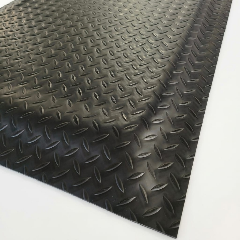
Anti-slip surface texture can improve safety, especially in environments where liquid spills may occur. Diamond plate or raised dot patterns are common anti-slip designs.
5. Chemical Resistance
Select oil-resistant and solvent-resistant mats based on the facility environment. If workstations may contact oils or chemical solvents, choose corresponding chemical-resistant models.
6. Color and Marking
Black + yellow border is a common safety warning color scheme. Some facilities also use color coding to distinguish different ESD protection level areas.
Maintenance and Testing
The performance of ESD anti-fatigue mats needs to be ensured through regular maintenance and testing:
Daily Maintenance
· Clean the mat surface with neutral detergent and soft cloth
· Avoid using strong solvents or abrasive cleaners to prevent damage to the ESD surface layer
· Regularly inspect the mat surface for obvious wear or damage
· Keep ground cords and grounding snaps clean to ensure good contact
Periodic Testing
· Surface resistance test: Recommended quarterly or semi-annually
· System resistance test: Verify overall resistance from mat surface to earth <1MΩ
· Grounding continuity test: Ensure reliable connection between grounding snaps, ground cords, and facility grounding system
· Records and documentation: All test results should be recorded and archived as evidence of ESD protection program compliance
Replacement Indicators
Consider replacing ESD anti-fatigue mats when the following conditions occur:
· Surface resistance exceeds the 10⁴-10⁹ Ω range
· Obvious wear, cracks, or damage appears on the mat surface
· Foam layer collapses, losing cushioning performance
· Grounding snaps become loose or damaged, unable to connect reliably
· Service life exceeds manufacturer's recommended lifespan (typically 3-5 years)
Conclusion: ESD Anti-Fatigue Mats Are a Productivity Investment, Not a Cost Expense
The value of ESD anti-fatigue mats should not be evaluated solely from the perspective of "mat procurement costs." As shown in Wearwell's 2-year tracking study, the 23% reduction in absenteeism and 70% reduction in injury rates brought by anti-fatigue mats directly translate to cost savings for enterprises:
· Reduced leave due to injuries and fatigue, lowering temporary staffing costs
· Reduced workers' compensation and medical insurance expenses
· Improved employee on-site efficiency, reducing quality defects caused by fatigue
· Improved employee satisfaction, reducing turnover rates and recruitment/training costs
· Ensuring ESD compliance, avoiding product scrap and customer complaints caused by electrostatic damage
In electrostatic-sensitive environments, selecting the correct ESD anti-fatigue mat is both a necessary measure to protect employee health and an ESD protection requirement to protect sensitive products and ensure production quality. This is a productivity investment with clear returns.
Contact Us
If you are looking for solutions for your facility's ESD protection and employee comfort, our engineering team can provide professional technical advice and selection support.
Email: info@yufapolymer.com
Web: www.yufapolymer.com
Address: Shenzhen, China
We can provide:
· Free sample testing
· Facility ESD protection assessment
· Customized solutions
· Technical data sheets (TDS) and compliance documentation