
Carbon-Filled Conductive Polypropylene (0.8–3mm): Functions, Properties & Applications
By Yufa Polymer Technical Team | Updated: June 2026
1. Introduction
In modern industrial manufacturing, electrostatic discharge (ESD) protection has become an indispensable part of the automotive, electronics, and semiconductor industries. ESD events can generate thousands of volts in an instant, causing permanent damage to sensitive electronic components and even triggering fires or explosions. According to industry estimates, ESD-related losses in the global electronics sector exceed billions of dollars annually.
Among the many ESD protection materials available, carbon-filled conductive polypropylene (Carbon-filled ESD PP) has emerged as one of the mainstream choices for industrial ESD protection, thanks to its excellent overall performance, reliable conductivity, and cost-effectiveness. This article provides an in-depth analysis of ESD PP from a materials science perspective, covering its functions, properties, application areas, and selection guidelines.
2. What Is ESD PP Material?
2.1 Basic Definition
ESD PP (Electrostatic Dissipative Polypropylene) is a functional material prepared by adding conductive fillers to a polypropylene matrix. Its core objective is to control the material’s surface resistivity within the range of 10⁶–10¹¹ Ω, providing controlled electrostatic dissipation capability.
Standard polypropylene (PP) is inherently an excellent electrical insulator, with surface resistivity as high as 10¹⁵–10¹⁷ Ω, making it highly susceptible to static charge accumulation. By incorporating conductive fillers such as carbon black or carbon fibers, a continuous conductive network is formed within the PP matrix, achieving a controllable resistivity level.
2.2 ESD Classification Levels
According to the IEC 61340-5-1 standard, materials are classified into the following ESD protection levels:
|
Type |
Surface Resistivity (Ω) |
Characteristics |
|
Anti-static |
10¹⁰ – 10¹¹ |
Basic static protection for general packaging |
|
ESD (Dissipative) |
10⁶ – 10⁹ |
Controlled dissipation for electronics/automotive |
|
Conductive |
< 10⁶ |
Rapid conduction for specialized applications |
The ESD PP discussed in this article primarily corresponds to the “Electrostatic Dissipative” level, with a typical surface resistivity of 10⁶–10¹¹ Ω. This is also the most commonly used ESD grade in the automotive industry.
3. Core Functions of ESD PP
3.1 Electrostatic Dissipation
The primary function of ESD PP is to dissipate accumulated static charges from the material surface to ground at a controlled rate. Unlike standard insulators, ESD PP allows charges to flow slowly and controllably, preventing sudden electrostatic discharge events. This “slow release” mechanism is critical for protecting sensitive electronic components.
3.2 Protective Function
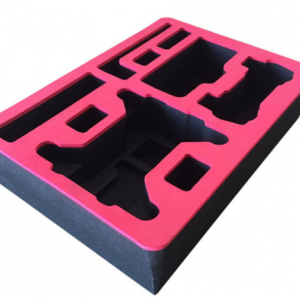
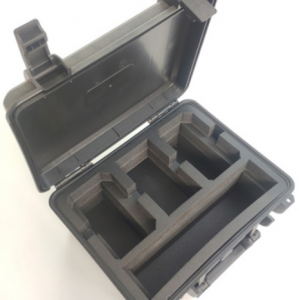
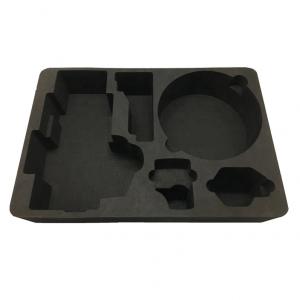
ESD PP products (such as transport boxes, dividers, and liners) provide continuous electrostatic protection during component handling. They not only protect products from static damage but also prevent dust adhesion, maintaining product cleanliness.
3.3 Permanent Performance
Unlike surface-coated anti-static materials, the conductivity of carbon-filled ESD PP is inherent to the bulk material (volume conductivity), not limited to the surface layer. This means that even after repeated wiping, cleaning, or extended use, its ESD performance does not significantly degrade, providing permanent anti-static protection.
4. In-Depth Material Properties
4.1 Conductive Mechanism
The conductivity of carbon-filled ESD PP is based on Percolation Theory. When the carbon filler concentration reaches the percolation threshold, carbon particles form continuous conductive pathways within the PP matrix, causing a significant drop in resistivity. By precisely controlling the type, amount, and dispersion process of the carbon filler, the resistivity can be tuned to the target range.
Key Factors Affecting Conductivity
• Filler Type: Carbon black, carbon fiber, graphene, and other fillers have significantly different effects on conductivity
• Filler Concentration: Beyond the percolation threshold, resistivity decreases with increasing filler content, but mechanical properties may be affected
• Dispersion Process: The uniformity of carbon filler dispersion in the PP matrix directly determines ESD performance stability
• Temperature & Humidity: Carbon-filled systems are minimally affected by environmental factors, a key advantage over humidity-dependent anti-static coatings
4.2 Physical Properties
|
Property |
Typical Value |
Test Standard |
|
Density |
0.90–0.92 g/cm³ |
ISO 1183 |
|
Tensile Strength |
25–35 MPa |
ISO 527 |
|
Flexural Modulus |
1200–2000 MPa |
ISO 178 |
|
Melt Flow Rate (MFR) |
2–15 g/10min |
ISO 1133 |
|
Surface Resistivity |
10⁶–10¹¹ Ω |
IEC 61340-5-1 |
|
Volume Resistivity |
10⁴–10⁸ Ω·cm |
IEC 60093 |
|
Water Absorption (24h) |
< 0.01% |
ISO 62 |
4.3 Chemical Stability & Environmental Resistance
The polypropylene matrix gives ESD PP excellent chemical stability:
• Acid/Alkali Resistance: Good resistance to most acids, alkalis, and salt solutions, suitable for chemical environments
• Moisture Resistance: PP has extremely low water absorption (<0.01%); humidity changes do not affect ESD performance, superior to humidity-dependent anti-static materials
• Temperature Resistance: Continuous use temperature range approximately -20°C to +100°C; short-term exposure up to 120°C
• Weather Resistance: Carbon-filled systems are not affected by UV; ESD performance remains stable in both indoor and outdoor environments
4.4 Processability
ESD PP can be processed through multiple methods:
• Extrusion: Producing sheets and films, with thickness ranging from 0.5–5mm
• CNC Cutting: Ideal for small-batch, multi-specification precision cutting
• Thermoforming: Sheets can be formed into complex shapes such as transport boxes and trays
• Injection Molding: Suitable for high-volume production of standardized products
5. Thickness Specification Analysis (0.8–3mm)
Sheet/film thickness is a critical parameter affecting ESD PP application performance. Different thicknesses vary significantly in mechanical strength, weight, cost, and application scenarios.
|
Thickness |
Weight |
Mechanical Strength |
Typical Applications |
Cost Profile |
|
0.8mm |
Lightest |
Good flexibility, light loads |
Dividers, liners, light packaging |
Lowest material cost |
|
1.0mm |
Light |
Balanced rigidity/flexibility |
Medium transport boxes, general dividers |
Moderate |
|
1.5mm |
Medium |
Higher rigidity |
Heavy-load boxes, workstation tools |
Moderate |
|
2.0mm |
Heavier |
High rigidity, impact resistant |
Heavy part transport, automation lines |
Higher |
|
3.0mm |
Heaviest |
Maximum strength & durability |
Work surfaces, heavy trays, structural |
Highest |
5.1 Engineering Considerations for Thickness Selection
In the automotive industry, 0.8mm and 1.0mm are the most commonly used thickness specifications. These two thicknesses achieve a good balance between weight and strength, making them particularly suitable for the transport and storage of automotive electronic components.
1.5–2.0mm is typically used in scenarios requiring higher mechanical strength, such as heavy-duty transport boxes and workstation equipment on automated production lines.
3.0mm is primarily used for structural applications such as work surfaces and heavy-duty trays that require long-term durability.
5.2 Thickness vs. Processing
Thinner sheets (0.5–0.8mm) require more precise process control during CNC cutting, as thin sheets are prone to deformation and tearing. This is why some manufacturers recommend thicker sheets. However, with mature processing techniques, 0.8mm can achieve stable cutting quality while offering lower material and shipping costs.
6. Application Areas
6.1 Automotive Electronics
Automotive electronics is one of the most important application areas for ESD PP. Modern vehicles contain numerous sensitive electronic components, including:
• ECUs (Electronic Control Units): Engine control, brake control, body control, etc.
• Sensors: Radar, cameras, ultrasonic sensors, etc.
• Charging Systems: On-board charging modules, connectors (CCS2, NACS, and other charging standards)
• ADAS Components: Various controllers for advanced driver assistance systems
6.2 Semiconductor & Electronics Manufacturing
The semiconductor industry has the strictest ESD protection requirements. ESD PP is widely used in:
• Wafer carriers for chip manufacturing processes
• Trays and dividers for IC packaging and testing
• Transport trays for SMT assembly lines
• Storage and transport packaging for PCB boards
6.3 Consumer Electronics Manufacturing
• Production line transport for smartphones and tablets
• Production and storage of displays (LCD/OLED)
• Packaging protection for precision instruments
• Production environments for data storage devices (HDDs, servers)
6.4 Medical Electronics & Pharmaceuticals
• Transport and storage of medical electronic equipment
• Precision instrument packaging for the pharmaceutical industry
• ESD protection tools for laboratory environments
6.5 Explosive Hazard Environments
In dusty environments, flammable gas areas, and other explosion-hazard locations, electrostatic sparks can cause serious accidents. ESD PP is used to manufacture tool boxes and containers that effectively prevent spark generation.
7. Typical Application Case Studies
Case 1: Automotive Charging Module Transport Box

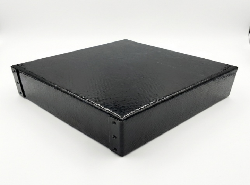
Background: A global automotive parts supplier produces charging modules (GEN5/NACS/AMG CCS2) for Mercedes-Benz, requiring large-scale transport between the production line and customer facilities.
Solution: 0.8mm carbon-filled ESD PP sheet, CNC-cut into dividers for ESD transport boxes. Surface resistivity: 10⁶–10¹¹ Ω, compliant with IEC 61340-5-1.
Case 2: Semiconductor Production Line Tray
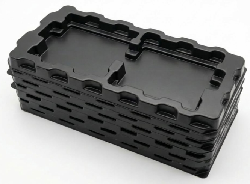
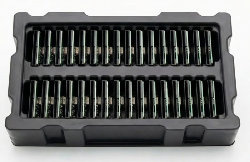
Background: A semiconductor packaging plant requires anti-static transport trays for its SMT line, with surface resistivity < 10⁹ Ω.
Solution: 2.0mm carbon-filled PP sheet, thermoformed into transport trays. The greater thickness ensures durability for repeated use.
Case 3: Precision Instrument Storage Divider
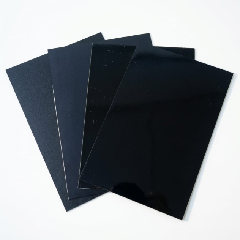
Background: An instrument manufacturer needs to protect precision sensors from both static and impact damage during storage and transport.
Solution: 1.0mm ESD PP sheet, CNC-cut to custom-sized dividers, providing both electrostatic protection and physical cushioning.
8. ESD PP vs. Other ESD Materials
|
Property |
ESD PP (Carbon-filled) |
ESD PE (Carbon-filled) |
ESD ABS |
ESD PC |
|
Density |
0.90–0.92 |
0.92–0.96 |
1.05–1.10 |
1.20–1.22 |
|
Chemical Resistance |
Excellent |
Excellent |
Fair |
Good |
|
Mechanical Strength |
Good |
Fair |
Good |
Excellent |
|
Temp. Resistance |
100°C |
80°C |
80°C |
120°C |
|
Cost |
Low |
Low |
Medium |
High |
|
Recyclability |
Excellent |
Excellent |
Good |
Good |
|
Typical Use |
Automotive/General |
Packaging/Liners |
Housings/Structural |
High-strength |
The core advantages of ESD PP are: low density (lightweighting), excellent chemical resistance, low cost, and good recyclability. These characteristics give it a clear overall advantage in high-volume automotive applications.
9. Material Selection Guide
9.1 Thickness Selection Decision Tree
• Light-load components, dividers, liners: Recommended 0.8–1.0mm
• Medium-load transport boxes: Recommended 1.0–1.5mm
• Heavy-load transport boxes, workstation equipment: Recommended 1.5–2.0mm
• Structural applications, work surfaces, trays: Recommended 2.0–3.0mm
9.2 ESD Grade Selection
• General packaging, non-sensitive products: Anti-static grade (10⁹–10¹¹ Ω) is sufficient
• Automotive electronic components: ESD grade (10⁶–10⁹ Ω), compliant with IEC 61340-5-1
• Semiconductor, precision electronics: Recommend upper ESD grade (10⁶–10⁸ Ω), or per customer specification
9.3 Key Certification Standards
• IEC 61340-5-1: Electrostatic protection standard for electronic devices
• ANSI/ESD S20.20: US electrostatic protection standard
• IATF 16949: Automotive industry quality management system certification
• IMDS: International Material Data System, required for automotive material declarations
10. Conclusion
Carbon-filled conductive ESD PP is a high-performance, cost-controllable electrostatic protection material. Its core advantages include:
• Permanent anti-static performance, unaffected by environmental humidity or surface wear
• Excellent chemical stability and environmental resistance
• Low density enables lightweighting, reducing transportation costs
• Low raw material cost, suitable for large-scale industrial applications
• Recyclable and reusable, aligned with sustainable development trends
In automotive electronics, semiconductors, precision instruments, and other industries, ESD PP has become an irreplaceable key material. With the electrification and intelligence of vehicles, and the continued growth of the semiconductor industry, demand for ESD PP will continue to grow strongly.
Selecting the appropriate material thickness, ESD grade, and processing method is critical to ensuring product quality and cost control. We recommend engaging with material suppliers early in the project phase to ensure the selection meets actual application requirements.
Disclaimer
This article is for technical reference only. Specific material parameters should be verified against the actual supplier’s Technical Data Sheet (TDS). Data in application cases is based on actual project information and is provided for reference purposes only.