
The Manufacturing Process, Structure, and Application Value of Anti-Static Plastic Honeycomb Panels
An in-depth analysis for procurement and engineering professionals in electronics, automotive, and semiconductor industries
1. Introduction: Why Redefine ESD Turnover Boxes?
In electronics manufacturing, semiconductor fabrication, and automotive parts production, ESD turnover boxes are indispensable consumables on the production line. For years, anti-static hollow boards (also known as corrugated plastic sheets) have been the default choice – mature, affordable, and backed by a well-established supply chain. However, they also come with obvious pain points: boards deform after repeated use, edges crush, and boxes crack, leading to frequent replacements.
Anti-static plastic honeycomb panels are now offering an entirely new solution for this niche market. This article starts from the material itself, providing an in-depth analysis of its manufacturing process, structural characteristics, performance advantages, and the products it can be made into, helping you determine whether it suits your application.
2. Material Analysis: What Is an Anti-Static Plastic Honeycomb Panel?
2.1 ESD Mechanism: Permanent Conductive Network via Carbon Black Filling
The anti-static function of plastic honeycomb panels is achieved by adding carbon black to a PP (polypropylene) or PE (polyethylene) base material. Carbon black is an excellent conductive filler, and its anti-static mechanism is based on the Percolation Threshold theory:
• Carbon black particles disperse within the polymer matrix, forming localized conductive paths
• When the loading exceeds the percolation threshold, particles form a continuous three-dimensional conductive network
• Electrons can move freely through the network, both internally and on the surface, rapidly dissipating static charges
• This is volume conductivity – independent of ambient humidity, providing permanent anti-static performance
2.2 ESD Performance Classification
According to international standards IEC 61340-5-1 and ANSI/ESD S20.20, anti-static materials are classified into three categories by surface resistance:
|
Material Type |
Surface Resistance Range |
Application |
|
Conductive |
10⁴ – 10⁸ Ω |
Highly sensitive components, semiconductor turnover |
|
Static Dissipative |
10⁵ – 10¹¹ Ω |
General electronic components, PCB turnover |
|
Insulative (Avoid) |
> 10¹¹ Ω |
Unsuitable for ESD protection scenarios |
Our current ESD honeycomb panels are manufactured to the conductive grade (10⁴–10⁸ Ω), offering superior anti-static performance compared to standard anti-static hollow boards, with faster static charge dissipation.
3. Manufacturing Process: Multi-Layer Co-Extrusion + Melt Bonding, No Adhesive
To understand why honeycomb panels perform so well, you must first understand how they are made. The core of this process is: multi-layer co-extrusion + melt bonding – entirely without adhesive.
3.1 Cross-Section Structure: Sandwich Composite
The cross-section of an anti-static plastic honeycomb panel is shown below:
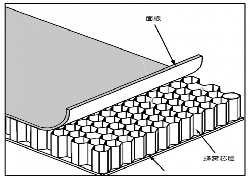
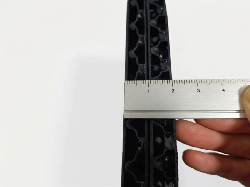
Fig.2: 10mm ESD honeycomb panel cross-section – honeycomb cells and face sheets visible as one integrated structure
The panel consists of three structural layers:
• Top and bottom face sheets:Flat layers providing surface strength and protection
• Central honeycomb core:Composed of countless regular hexagonal honeycomb cells, providing the primary structural support
3.2 Process Flow: From Resin to Panel in One Integrated Step
• Multiple extruders working in coordination:Two or more extruders handle the face sheet layers and the honeycomb core layer separately
• Honeycomb core vacuum forming:After extrusion, the core layer is shaped into regular hexagonal cells via vacuum forming
• Direct melt-state bonding:While the material is still in a molten state, the face sheets are directly bonded to the honeycomb core – no adhesive required, forming a robust integrated structure
• Continuous inline production:From resin pellets to finished panels, the entire process is completed in a continuous, automated line
The core advantage of this process: adhesive-free bonding means stronger interlayer adhesion, eliminating delamination and cracking risks; it also avoids any impact on anti-static performance from adhesives.
3.3 Process Difficulty and Technical Barriers
The technical difficulty of this process far exceeds the single-layer extrusion used for hollow boards:
• Extremely high carbon black dispersion uniformity:During multi-layer co-extrusion, carbon black must be evenly dispersed in every layer. Poor dispersion leads to broken conductive networks, directly affecting ESD performance stability
• Virgin material only:Impurities in recycled material disrupt the continuity of the carbon black conductive network; under the high-precision requirements of multi-layer co-extrusion, this effect is amplified
• Precise interlayer bonding temperature control:The thermal bonding temperature between face sheets and honeycomb core must be precisely controlled – too high deforms the honeycomb cells, too low results in weak adhesion
• Limited panel dimensions:The width of the co-extrusion die and the precision of honeycomb core vacuum forming determine that panel sizes cannot be flexibly adjusted like hollow boards
3.4 Product Specifications
We currently offer anti-static plastic honeycomb panels in two thickness specifications:
|
Specification |
10mm Honeycomb Panel |
4mm Honeycomb Panel |
|
Primary Use |
Heavy-duty turnover, pallets, special structural parts |
Standard material for ESD turnover boxes |
|
Standard Size |
2300×1200×10mm |
2300×1200×4mm |
|
Surface Resistance |
10⁴–10⁸ Ω |
10⁴–10⁸ Ω |
|
Weight /m² |
2900g |
1200g |
4mm is the standard thickness for ESD turnover boxes. It provides sufficient structural strength while maintaining a lighter weight for easy handling and turnover.
4. Structure & Performance: Why Are Honeycomb Panels Stronger?
Process determines structure; structure determines performance. Below, we analyze the performance advantages of honeycomb panels over hollow boards based on cross-sectional structure.
4.1 Hollow Board Limitations: Anisotropy
The cross-section of a hollow board consists of parallel corrugated structures, similar to corrugated cardboard. This structure brings an inherent characteristic: anisotropy.
• Along the corrugation direction: higher compressive strength, effective for stacking loads
• Perpendicular to corrugation: strength drops significantly, prone to deformation
• During repeated turnover, box edges and corners are the first to crush and crack
• Long-term stacking causes creep, gradually reducing box height
4.2 Honeycomb Panel Advantages: Quasi-Isotropic Structure
The honeycomb panel cross-section features countless densely packed regular hexagonal cells, with a flat face sheet on top and bottom. This sandwich composite structure brings fundamental differences:
• Quasi-isotropic:The hexagonal cell network distributes compressive loads simultaneously in all lateral directions – no weak direction
• I-beam effect:From a mechanics perspective, the honeycomb panel is an assembly of countless I-beams – the honeycomb core acts as the web, and the face sheets act as the flanges, efficiently distributing pressure in all directions
• Strong creep resistance:The honeycomb structure’s ability to resist deformation under sustained loads is significantly superior to hollow boards; no gradual flattening during stacked storage
• Excellent energy absorption:The honeycomb structure effectively absorbs impact energy; studies show honeycomb structures absorb approximately 60% more impact energy than corrugated structures of equal weight
• Strong interlayer bonding:The direct melt-state bonding process ensures high bonding strength between face sheets and core, with no delamination risk unlike adhesive-based processes
4.3 Key Parameter Comparison: 4mm Honeycomb Panel vs 5mm Hollow Board
|
Parameter |
ESD Hollow Board |
ESD Honeycomb Panel |
|
Panel Thickness |
5mm |
4mm |
|
Weight /m² |
850g |
1200g |
|
Surface Resistance |
10⁵–10¹¹ Ω (Static Dissipative) |
10⁴–10⁸ Ω (Conductive) |
|
Structure Type |
Parallel corrugation (Anisotropic) |
Hexagonal honeycomb + Sandwich composite (Quasi-isotropic) |
|
Manufacturing Process |
Single-layer extrusion |
Multi-layer co-extrusion + Melt bonding (No adhesive) |
|
Material Requirement |
Can include recycled material |
Virgin material only |
|
Standard Panel Size |
2400×1500mm |
2300×1200mm |
Key conclusion: A 4mm honeycomb panel is stronger than a 5mm hollow board. This is not marketing – it is the inevitable result of structural mechanics. The mechanical efficiency of honeycomb structures far exceeds parallel corrugation, just as an arch bridge can bear greater loads than a flat slab.
5. Application Value: What Products Can Honeycomb Panels Make?
Anti-static plastic honeycomb panels are not just a board material – they can be processed into various ESD turnover products for electronics, automotive, semiconductor, and other industries.
5.1 ESD Turnover Boxes
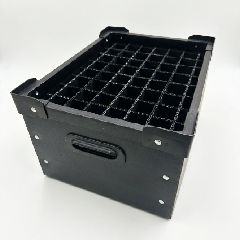
4mm honeycomb panels are the standard choice for ESD turnover boxes. Compared to hollow board boxes, honeycomb panel boxes offer:
• Longer service life:Stronger compression and creep resistance, maintaining shape through repeated turnover
• Better omnidirectional strength:Quasi-isotropic structure means uniform load distribution regardless of which direction force is applied
• Superior impact resistance:The honeycomb structure dissipates energy through progressive cell wall buckling, better protecting internal components
• More stable ESD performance:Conductive-grade resistance (10⁴–10⁸ Ω) is lower than standard dissipative grade, dissipating static faster
5.2 ESD Dividers and Knife Cards
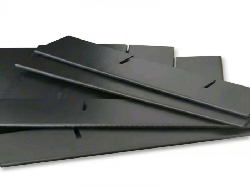
Honeycomb panels can also be processed into dividers and knife cards for internal box compartmentalization, protecting components from collision.
5.3 ESD Pallets and Trays
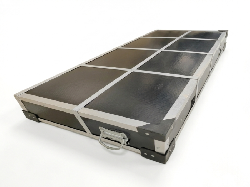
10mm honeycomb panels, with greater thickness and structural strength, are particularly suitable for heavy-duty ESD pallets used in automotive and mechanical parts turnover and storage.
5.4 Other Applications
• ESD wall-panel boxes: For turnover and storage of large components
• ESD packaging pad boards: Bottom cushioning for products, providing buffer and ESD protection
• ESD workbench liner boards: For work surface coverage, providing anti-static protection
5.5 Real-World Case Study
One of our French customers was previously using anti-static hollow board turnover boxes and was very dissatisfied with the boxes’ impact resistance. We sent them ESD plastic honeycomb panel samples. After testing, they confirmed that boxes made from 4mm honeycomb panels were significantly stronger than those from 5mm hollow boards, and subsequently began placing regular custom orders. This case demonstrates that the structural advantages of honeycomb panels can be verified through actual testing.
6. Market Background: Growth Potential for ESD Turnover Products
The global ESD packaging market is growing steadily:
• The global ESD packaging market is projected to reach USD 2.2 billion in 2025 and USD 3.4 billion by 2035 (CAGR 4.6%)
• Boxes and containers account for approximately 11% of the ESD packaging market; trays and pallets account for approximately 21% – this is the target segment for honeycomb panel turnover boxes
• Conductive and dissipative polymer materials account for approximately 63.5% market share – the mainstream ESD packaging material
• Key growth drivers: semiconductor manufacturing expansion, EV electronics upgrades, tightening global ESD regulations
In this growing market, turnover products offering longer service life and stronger protection will capture greater market share.
7. Honest Assessment: Limitations of Honeycomb Panels
We believe a valuable technical article should honestly address product limitations, not just advantages.
• Single color:Due to carbon black filling, only black is available. If your application requires specific colors, honeycomb panels cannot currently meet this need
• Fixed panel dimensions:Current standard panel size is 2300×1200mm, unlike hollow boards which can be flexibly sized to minimize edge waste
• Virgin material only:The multi-layer co-extrusion process demands extremely high material purity; impurities in recycled material disrupt the carbon black conductive network
• Different box-making process:Honeycomb panel box-making differs from hollow board processes; not all hollow board box manufacturers can directly switch production
• Low market awareness:ESD honeycomb panels for turnover boxes are still in early adoption stages, with few suppliers
These limitations are objective. However, for customers seeking longer service life, stronger structural integrity, and higher ESD ratings, these are acceptable trade-offs.
8. What We Offer
We welcome both bulk panel orders and custom-fabricated turnover products:
• ESD honeycomb panels:Standard size 2300×1200mm, available in 4mm and 10mm thickness, resistance 10⁴–10⁸ Ω
• Custom ESD turnover boxes:Made to your dimensions, including wall-panel boxes, folding boxes, and boxes with dividers
• ESD honeycomb pallets:For heavy-duty parts turnover and storage in automotive and other industries
• ESD dividers / knife cards:For internal compartment protection
• Sample testing:We welcome sample requests for your own testing and verification – we believe the product’s real-world performance will speak for itself
9. Conclusion
Anti-static hollow boards are a mature solution with undeniable advantages. But when you demand higher structural strength, better impact resistance, and longer service life from your turnover boxes, anti-static plastic honeycomb panels are an upgrade worth seriously evaluating.
Its core advantages: Multi-layer co-extrusion + melt bonding process, no adhesive, strong interlayer bonding; sandwich honeycomb structure, quasi-isotropic, excellent mechanical performance; carbon black filling provides permanent volume-based ESD protection, unaffected by humidity.
If you are looking for more durable ESD turnover products, we welcome you to contact us. We can provide samples for your actual testing – let the data speak.